Like this podcast? Create your own with Apisod
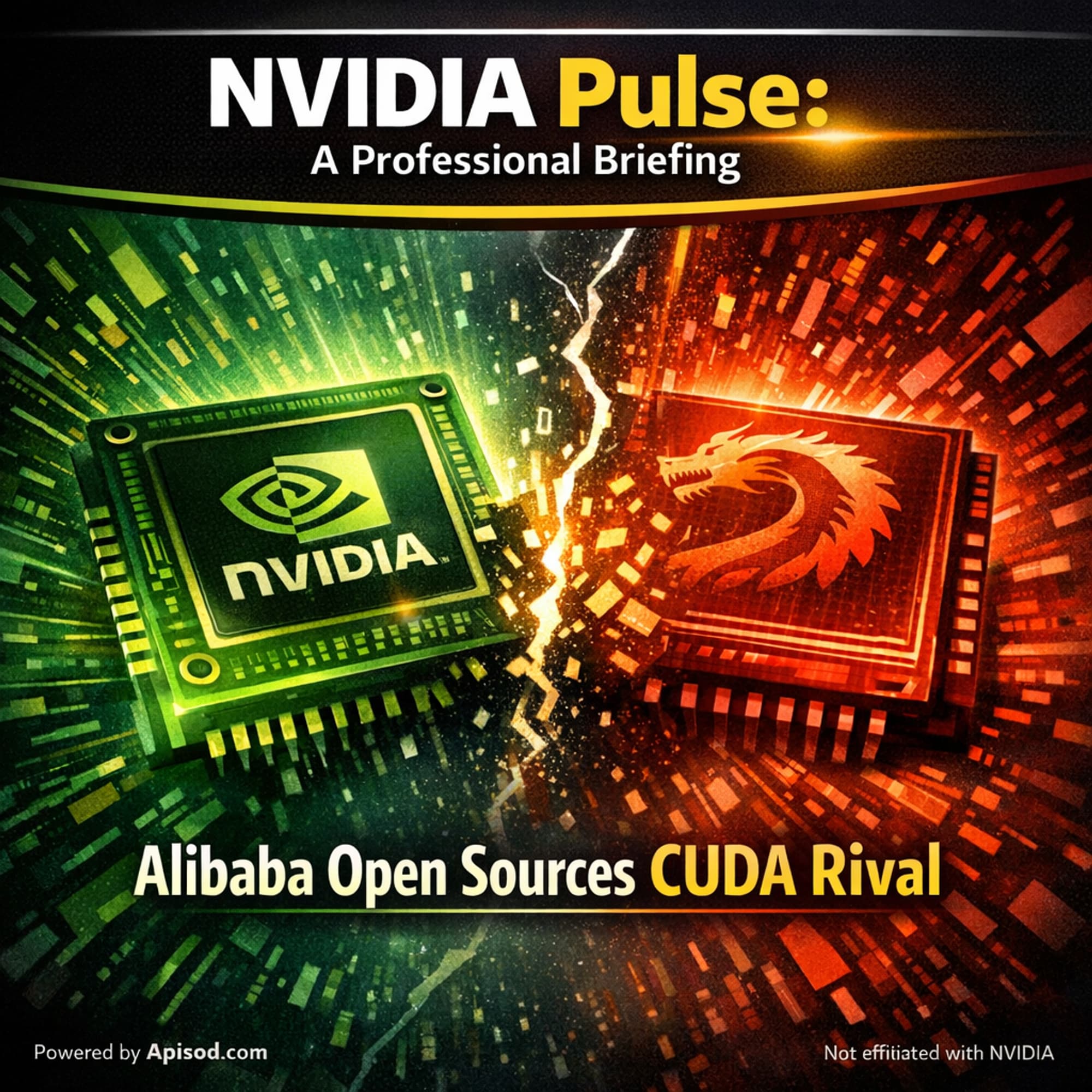
Alibaba Open Sources CUDA Rival

Show Notes
Apple is deepening its AI ambitions, targeting NVIDIA’s dominance with a new wave of in-house server chips and strategic acquisitions. The current Valtra chip delay and a specialized M7 Ultra not expected before 2029 mean Apple won’t threaten NVIDIA’s revenue right away, but the intent is clear: tech giants are seeking to reduce their dependence on NVIDIA. This growing push for diversification — with Apple joining Meta, Google, and Amazon — matters now, as it gives these buyers more leverage to negotiate lower prices and better terms, even before their custom chips are ready.
But here’s the catch: China is moving fast to erode NVIDIA’s biggest advantage — its CUDA software ecosystem. Alibaba just open-sourced SAIL, a software suite for its Zhenwu AI chips, aiming to make it easier for developers to move away from NVIDIA’s tools. This mirrors Huawei’s own software move and signals China’s focus is shifting from just hardware to AI software, making future export controls less potent. Meanwhile, NVIDIA is fighting back by beefing up its own open-source AI software, trying to keep its hardware as the default choice in a shifting landscape.
The financial world is catching on. Lenders like Upper90 are now backing AI chip startups that use alternatives to NVIDIA GPUs, suggesting capital may shift to new inference hardware stacks if they prove more cost-effective. Featuring insights from The Information, Reuters, and Tech Times.
Powered by Apisod.com