Like this podcast? Create your own with Apisod
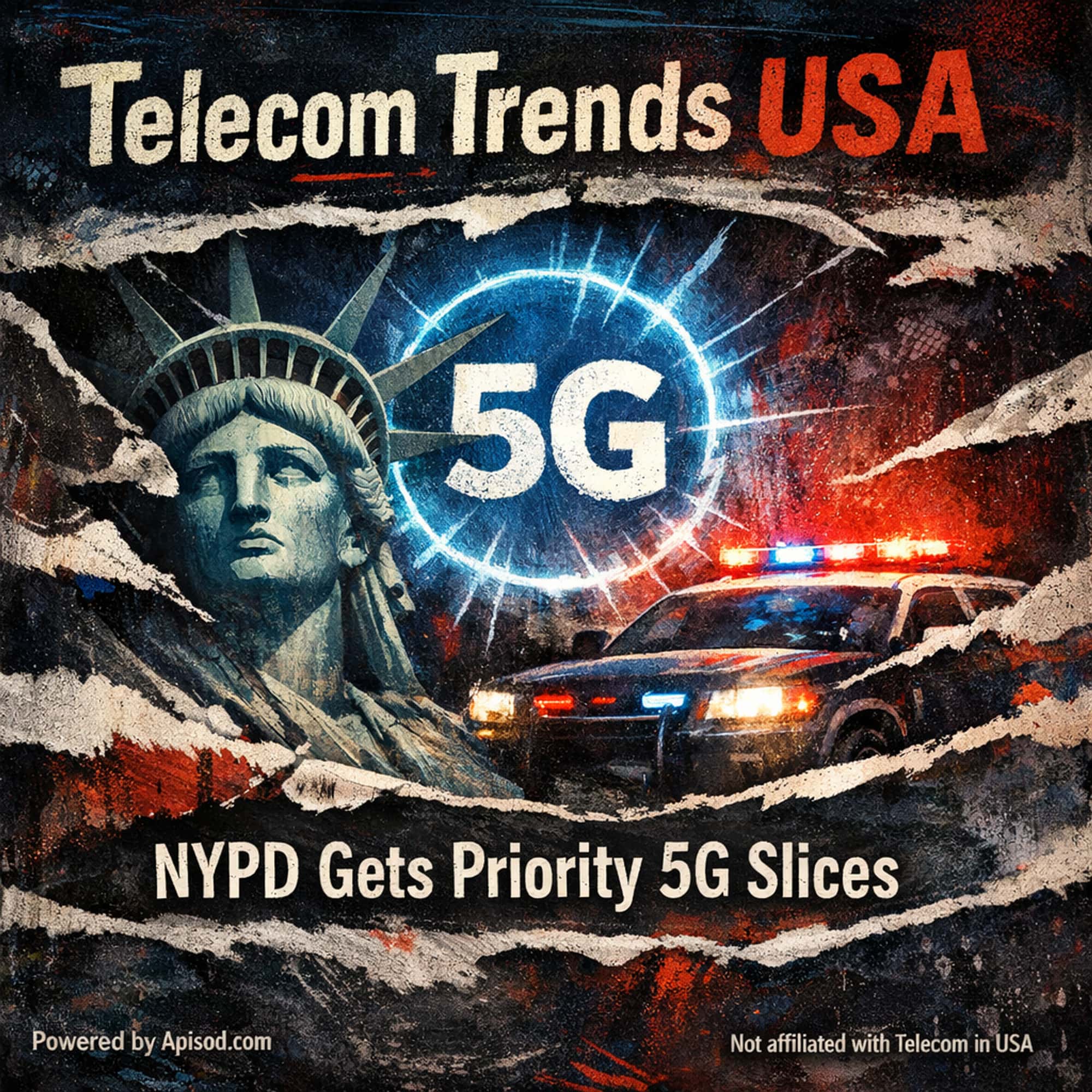
NYPD Gets Priority 5G Slices
Show Notes
Carriers are touting enterprise-grade 5G, but the real test is whether these upgrades deliver in the wild. T-Mobile is first to scale with 5G-Advanced, rolling out lower lag for video and gaming, priority network slices for first responders, and cheaper connectivity for wearables—all on their standalone 5G core. EVP Ankur Kapoor claims iPhones on T-Mobile are nearly 50% faster than rivals, and early surveys show T-Mobile edging out Verizon for the first time in over a decade. But the tech gap is closing: AT&T and Verizon lit up their own standalone 5G cores in late 2025, threatening to erase T-Mobile's lead.
Here’s the catch—while features are live, the revenue payoff is still just a promise. Enterprise customers want proof they’re getting what they pay for, and over the next year, all eyes are on whether T-Mobile can convert pilots into paid, industry-specific products. Meanwhile, the competitive map is shifting. Cable giants Comcast and Charter are eating up market share with cheap mobile lines bundled into home internet, and AT&T and Verizon are doubling down on fiber, amassing tens of millions of fiber households. T-Mobile, with only fledgling fiber and heavy reliance on wireless home internet, faces tough trade-offs: more fixed wireless means less mobile performance unless they densify or partner up.
Reliability is under the microscope, too. Recent Verizon outages in Oregon left 911 service shaky, putting new pressure on carriers to shore up vendor networks and emergency access. In rural markets like Idaho, T-Mobile is investing heavily in new sites, racing ahead where fiber is scarce—but once fiber lands, wireless faces real churn. Based on reporting from Bonner County Daily Bee, Coeur d’Alene Press, Fierce Network, KTVZ, and Statesman Journal.
Powered by Apisod.com