Like this podcast? Create your own with Apisod
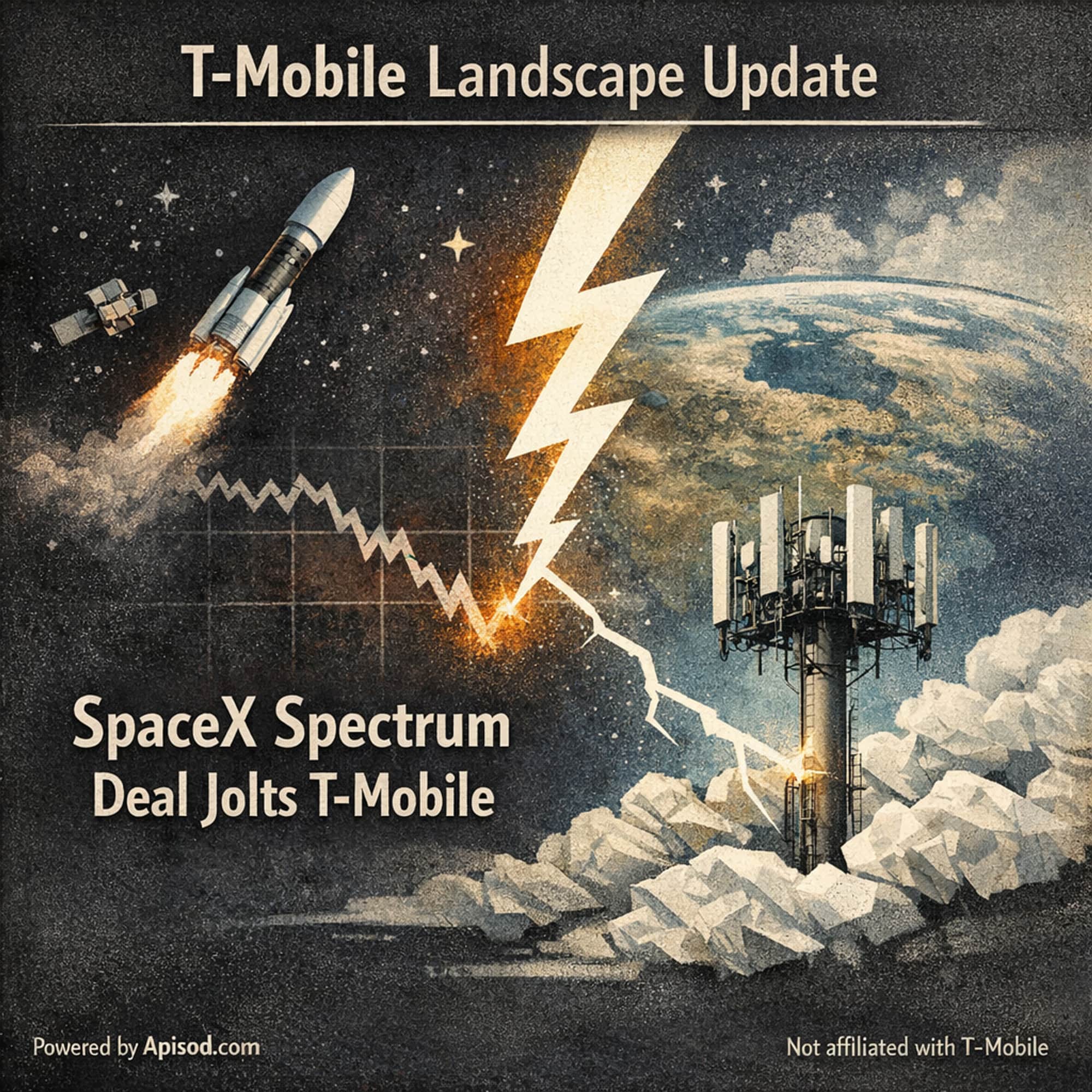
SpaceX Spectrum Deal Jolts T-Mobile
Show Notes
SpaceX just shook up the mobile industry, snapping up nationwide low-band spectrum and locking in FCC approval to launch up to 15,000 satellites for cell phone service by 2032. The fallout was immediate: shares of AT&T, Verizon, and T-Mobile all slumped—Wall Street is betting SpaceX’s Starlink Mobile could be a serious threat, especially for rural and budget-conscious users. But spectrum isn’t the same as a full network, and building a viable service—especially for indoor coverage—remains a massive technical and regulatory challenge.
Here’s the twist: T-Mobile, once a Starlink partner, just stripped Starlink branding from its satellite service pages as the Big 3 carriers announced their own satellite initiative. The move looks like hedging if SpaceX turns rival, but contracts for current joint projects are still in place. Meanwhile, T-Mobile is doubling down on its terrestrial advantage, deploying AI to steer network investments and keep customers connected during disasters and major events—using real-time data, not just gut instinct.
The stakes are high. The next 12–24 months will show if T-Mobile’s AI-guided strategy keeps churn low and ARPU steady before Starlink Mobile’s late-2027 debut. Insights pulled from reporting by Axios, Bernstein, and TD Cowen.
Powered by Apisod.com