Like this podcast? Create your own with Apisod
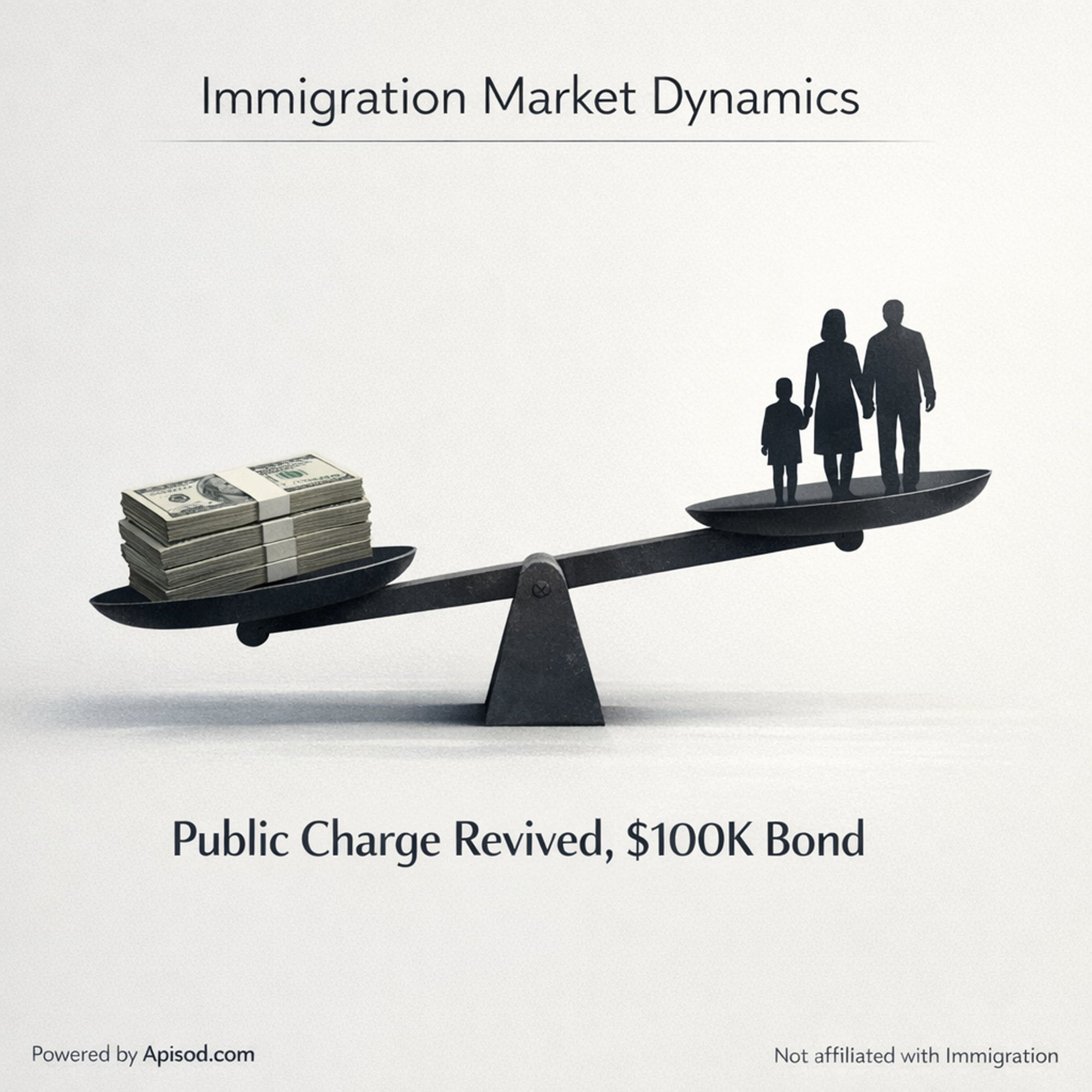
Public Charge Revived, $100K Bond
Show Notes
The Biden administration is reviving tough rules on immigrants’ use of public benefits, bringing back the “public charge” test that counts Medicaid, SNAP, and housing vouchers against green card applicants. This means if noncitizens use certain benefits for more than 12 months in a three-year window, they could be denied legal status. The move hits hardest for family-based applicants and mixed-status households, spurring fears that families will skip needed healthcare to avoid jeopardizing their status. For employers and health systems, that spells higher risks: deferred care, greater HR and legal headaches, and a surge in documentation and adjudication delays.
But here’s the catch: the State Department is also considering an unprecedented $100,000 green card bond for some visa applicants—a steep cash requirement meant to prove financial self-sufficiency. While it’s just a proposal for now, the mere hint of a bond is already changing behavior, favoring wealthier immigrants and those with deep-pocketed sponsors. If piloted, it could slam the door on reunification for less affluent families while pushing employers to rethink sponsorship strategies, all against a backdrop of mounting denials and appeals.
On top of federal policy shifts, the Justice Department is suing Maryland over its sanctuary law, raising the stakes for local governments and employers caught in the crosshairs. With ICE raids and constitutional rights at play, organizations must move fast to retrain staff, adjust compliance, and brace for legal turbulence. Featuring insights from Harvard’s Jacqueline Bhabha and field reporting from USC Dornsife, this episode unpacks what these fast-moving changes mean for families, employers, and the legal landscape ahead.
Powered by Apisod.com