Like this podcast? Create your own with Apisod
First LLMs on the Moon

Show Notes
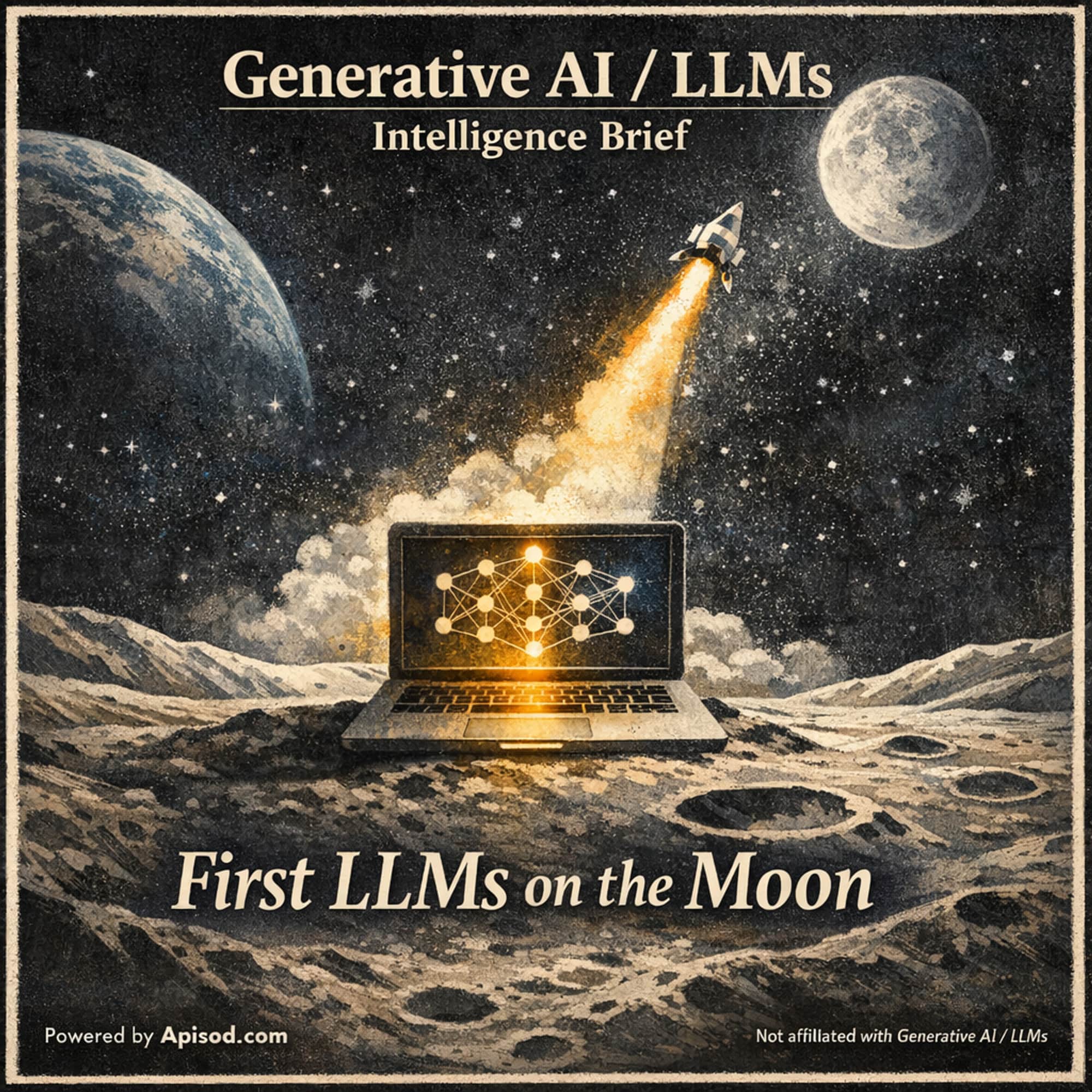
NASA is betting big on autonomy for its next lunar mission—Astrolab’s FLIP rover will carry HPE’s Spaceborne‑4 edge computer to the moon’s south pole in 2026, running large language models (LLMs) directly on the lunar surface for the first time. With extreme temperatures, intense radiation, and a ten-day mission window, this is a real-world test of using AI to navigate, analyze data, and slash the amount of information sent back to Earth. The core gamble: software-based resilience replaces custom radiation-proof hardware, and success on the moon could reshape how AI supports everything from mining to defense in harsh, remote locations.
But here’s the catch: the AI explosion is triggering a global shift toward stricter data rights and operational guardrails. Google just inked a multi-year deal to license CNN’s journalism for its AI news products—no more scraping without credit or payment—while Japan’s actors union is mandating explicit, project-by-project consent for AI voice replication, including royalties and advance notification. At the same time, new U.S. government and FDA rules are ring-fencing sensitive data and demanding post-market monitoring for AI-powered medical devices. This means higher costs, legal certainty, and a scramble for compliant, premium data as base models become commoditized.
Featuring insights from NASA CLPS, HPE, the ISS National Lab, and reporting from CNN, the Bipartisan Policy Center, and Apple Machine Learning Research.
Powered by Apisod.com